
If you have seen someone describe a person, conversation, relationship, idea, or experience as “vanilla,” you may wonder what the word means beyond its connection with the familiar flavor.

In everyday English, vanilla can describe something plain, ordinary, conventional, or lacking unusual features. Its exact meaning depends heavily on the context in which it appears.
The expression is especially common in online conversations, social media, dating discussions, entertainment, and casual texting. Sometimes it is completely harmless and simply means “basic” or “traditional.”
In other situations, particularly when people are discussing relationships or intimacy, it can describe preferences that are considered conventional rather than adventurous.
A person calling something vanilla may be complimenting its simplicity, criticizing its lack of originality, or simply describing it neutrally.
This guide explains the vanilla meaning slang, its background, different uses, common misunderstandings, and how to respond when someone uses the term.
Meaning & Definition
In slang and informal English, vanilla generally means plain, ordinary, conventional, simple, or not especially adventurous.
The word comes from the familiar vanilla flavor, which is often associated with something basic or standard. However, the slang meaning does not necessarily mean that something is bad.
For example, if someone says, “I like vanilla movies,” they might mean that they prefer straightforward movies without extreme violence, complicated plots, or unusual themes. Similarly.
Someone might say, “My style is pretty vanilla,” meaning that they prefer conventional clothing rather than bold or experimental fashion.
The word can also describe personalities. A person described as vanilla may be viewed as predictable, calm, traditional, or somewhat unexciting. Whether that description is positive or negative depends on the speaker’s attitude.
In relationships and dating, the word can have a more specific meaning. “Vanilla” can describe conventional romantic or intimate preferences.
In this context, it is often used in contrast with preferences that are more experimental or unconventional.
The most important point is that vanilla does not have one fixed slang definition. It is a flexible word whose meaning changes according to the subject being discussed.
Common interpretations include:
- Plain: Nothing unusual or complicated.
- Basic: Following a familiar or standard pattern.
- Conventional: Closely following common expectations.
- Predictable: Easy to understand or anticipate.
- Unadventurous: Not interested in experimentation.
- Simple: Straightforward rather than complicated.
- Traditional: Favoring familiar choices over new ones.
For example, “That is a vanilla answer” could mean the answer is safe and predictable. “She has a vanilla taste in music” could mean she prefers mainstream or familiar music. Meanwhile, “Their relationship is vanilla” could refer to a conventional relationship dynamic.
Therefore, when interpreting the word, consider what is being described, who is saying it, and the tone of the conversation.
Background
The slang use of vanilla developed from the ordinary meaning of the word. Vanilla is a familiar flavor used in many everyday foods and drinks, so it gradually became associated with something standard, familiar, or uncomplicated.
The comparison works because vanilla is often treated as a default flavor. When people want to describe something that does not contain unusual or extreme characteristics, “vanilla” can work as a metaphor.
Over time, informal English began using the word in broader ways. It could describe software settings, entertainment, personalities, experiences, preferences, and social behavior. In many cases, the idea is that the thing being described is close to the “standard version.”
The expression became particularly useful in technology and gaming communities. For example, a “vanilla” version of a game usually means the original or unmodified version without additional modifications. In software discussions, vanilla can similarly mean something used in its basic form rather than with extensive customizations.
The word also became increasingly visible in discussions about dating and relationships. There, “vanilla” can refer to conventional romantic or intimate preferences. It is often used as a neutral descriptive term, although some people may use it negatively to imply that a person is boring or unwilling to experiment.
Importantly, calling something vanilla does not automatically communicate an insult. The emotional meaning depends on context. A person might proudly say, “I’m vanilla, and I like keeping things simple.” Another person might use the same word to criticize something for being predictable.
This flexibility explains why the term appears in so many different conversations.
The modern slang meaning can therefore be understood as an extension of the original flavor metaphor:
Vanilla flavor → familiar/default → plain or conventional → broader slang meaning.
Because language constantly changes, the word may also develop slightly different meanings within particular online communities. Someone using it casually may simply mean “normal,” while someone discussing relationships may be referring to a particular type of preference.
Usage in Different Contexts
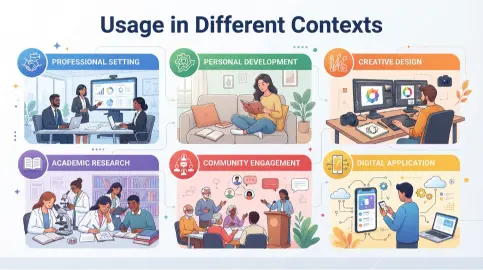
The meaning of vanilla changes according to the situation. Understanding the context is more useful than memorizing a single definition.
In casual conversation
In everyday conversation, vanilla often means ordinary or conventional.
Example:
“His taste in movies is pretty vanilla.”
This could mean that he enjoys mainstream, familiar movies rather than unusual or experimental ones.
In food discussions
The literal meaning remains connected to the flavor.
“I always order vanilla ice cream.”
Here, there is no slang involved.
In entertainment
Vanilla can describe something safe, predictable, or conventional.
“The new series feels a little vanilla.”
The speaker may be saying that the show lacks originality or excitement.
In technology
“Vanilla” can mean an original, basic, or unmodified version.
For example:
“I’m using vanilla software without extra plugins.”
The meaning here is closer to “standard” or “unmodified.”
In gaming
Gamers may use vanilla to describe a game in its original state, without modifications, special expansions, or community-created additions.
In personality descriptions
Someone might say:
“I’m pretty vanilla when it comes to hobbies.”
This could mean the person enjoys common, familiar activities.
In relationships

The term may describe conventional romantic or intimate preferences. It should not automatically be interpreted negatively. Some people use it simply to describe what feels normal or comfortable for them.
In professional communication
Vanilla is less common in formal business writing. However, it can appear in workplace conversations involving technology, product design, finance, marketing, or strategy.
For example:
“The client wants a vanilla implementation.”
This could mean they want a straightforward solution without unnecessary customization.
Because the word can sometimes carry a judgmental tone, professional speakers should use it carefully. Words such as standard, conventional, basic, or unmodified may be clearer in formal documents.
Meaning in Chat, WhatsApp, Instagram, and TikTok
On messaging and social platforms, vanilla is usually informal shorthand for something simple, basic, conventional, or predictable.
If someone sends:
“I’m pretty vanilla 😂”
they may be saying that their preferences are simple or traditional. The emoji can indicate that the statement is playful rather than serious.
If someone says:
“Your outfit is vanilla.”
they may mean the outfit looks basic or conventional.
On Instagram, the word may appear in captions, comments, or conversations about fashion, lifestyle, relationships, food, or entertainment.
For example:
“Everyone loves the vanilla aesthetic.”
Here, vanilla might suggest a clean, simple, neutral, or conventional style.
TikTok
TikTok users often use words metaphorically and humorously. A creator might call an opinion “vanilla” to mean that it is safe, common, or not controversial.
For example:
“That’s such a vanilla take.”
This generally means:
“That’s a very safe or predictable opinion.”
In direct messages
When someone says:
“Are you vanilla?”
the meaning depends entirely on the previous conversation. It could be a harmless question about preferences, or it could refer to romantic or intimate preferences.
If you are unsure, asking what they mean is completely reasonable.
Tone matters
The word can be:
- Neutral
- Playful
- Teasing
- Slightly critical
- Complimentary
For example, “I prefer vanilla coffee” is literal. “He’s so vanilla” may be teasing or critical. “I’m happily vanilla” is usually a self-description.
Therefore, never interpret the word from the term alone. Read the surrounding messages and consider the relationship between the people communicating.
Meaning in Physics, Medical, and Aircraft Terminology
The word vanilla does not have one universal technical meaning in physics, medicine, or aviation. This is an important distinction because a term that is slang in everyday communication may appear differently in specialized fields.
Physics
In physics, “vanilla” is generally not a fundamental technical term comparable to concepts such as force, energy, momentum, or wavelength. Researchers may occasionally use “vanilla” informally to describe a basic or standard model, but that is conversational language rather than a formal physics definition.
If you encounter “vanilla” in a physics-related discussion, check the surrounding sentence to determine whether the writer is using it metaphorically.
Medical fields
Vanilla is not a standard medical diagnosis or universal clinical term. Healthcare professionals generally use precise terminology rather than slang.
However, medical or scientific discussions may mention vanilla literally because vanilla compounds, flavors, extracts, or related substances can be relevant to food, chemistry, sensory research, or pharmaceutical ingredients.
If someone uses “vanilla” in a medical conversation to describe a person or treatment, it is likely informal rather than a standardized medical classification.
Aircraft and aviation
In aviation, vanilla can similarly appear as informal language rather than as a standard aviation term.
Someone might describe an aircraft configuration as “vanilla” to mean that it is a basic or conventional configuration without unusual modifications. In technical documentation, however, more precise terms such as standard configuration, baseline configuration, or unmodified aircraft are generally preferable.
This distinction is useful because online searches can sometimes combine slang meanings with technical terminology. The presence of the word in a technical discussion does not automatically give it a specialized dictionary definition.
In short, outside everyday slang, vanilla is usually descriptive informal language rather than a universal technical term.
Common Misconceptions
Several misunderstandings surround the word vanilla because its meaning can change significantly between contexts.
Misconception 1: Vanilla always means boring
Not necessarily. Vanilla can mean simple or conventional without being negative.
Someone may genuinely prefer uncomplicated experiences and describe them as vanilla.
Misconception 2: Vanilla always refers to relationships
It does not. The word can describe food, technology, games, clothing, entertainment, opinions, personalities, and many other things.
Misconception 3: Calling someone vanilla is always an insult
The tone determines whether it is insulting. Friends may use it playfully, while another speaker might use it critically.
Misconception 4: Vanilla means inexperienced
Not necessarily. A person can have extensive experience while still preferring conventional options.
Misconception 5: Vanilla means having no personality
This is another exaggeration. A person can have a strong personality while enjoying traditional or uncomplicated things.
Misconception 6: The word has the same meaning everywhere
Online communities may use the term differently. Gaming, dating, technology, and general social media conversations can give it slightly different meanings.
Misconception 7: Vanilla is always a negative word
It can be positive. For some people, “vanilla” suggests comfort, reliability, familiarity, and simplicity.
The safest interpretation is therefore:
Vanilla usually means standard, conventional, simple, or unadventurous, but the intended tone depends on context.
Similar Terms & Alternatives
Several words overlap with vanilla, although they are not always exact synonyms.
Basic
“Basic” often describes something common, mainstream, or predictable. It can be neutral or insulting depending on tone.
Example:
“That’s a pretty basic outfit.”
Plain
Plain emphasizes simplicity or a lack of decoration.
Example:
“I prefer plain designs.”
Ordinary
Ordinary means normal or not unusual. It is generally more neutral than slang expressions.
Conventional
Conventional means following established or widely accepted patterns. It is useful in formal writing.
Mainstream
Mainstream refers to ideas, entertainment, products, or styles that are widely accepted or popular.
Traditional
Traditional emphasizes established customs, practices, or preferences.
Predictable
Predictable focuses on the expectation that something will happen in a familiar way.
Unadventurous
Unadventurous is more clearly negative and suggests an unwillingness to try unfamiliar things.
Standard
Standard is particularly useful in technical or professional settings because it communicates the idea of a normal or default version without necessarily judging it.
Unmodified
In technology and gaming, unmodified can sometimes be a better alternative to vanilla because it explains exactly what is meant.
The best replacement depends on the situation. In formal writing, standard, conventional, or unmodified is usually clearer than vanilla. In casual online communication, vanilla sounds more natural.
How to Respond to It
How you respond to “vanilla” depends on what the other person means.
If someone uses it positively, you can simply agree:
“Yeah, I prefer keeping things simple.”
vanila If they are teasing you, a playful response can work:
“Maybe, but at least I know what I like.”
If you are unsure about the meaning, ask:
“What do you mean by vanilla?”
This is especially useful in dating conversations because the word can have different implications.
If someone says:
“You’re pretty vanilla.”
you might respond:
“Do you mean traditional, or are you saying I’m boring?”
This gives the other person a chance to clarify instead of forcing you to guess.
If the term feels judgmental, you can respond calmly:
“I don’t see being conventional as a bad thing.”
In a professional setting, it can be helpful to clarify the specific meaning:
“When you say vanilla, do you mean the standard configuration?”
This prevents misunderstandings.
The important thing is not to assume that the word is automatically an insult. Ask for context when necessary.
Differences From Similar Words
Although vanilla overlaps with several words, the differences can be important.
| Word | Typical meaning | Tone |
|---|---|---|
| Vanilla | Simple, conventional, standard | Neutral to mildly negative |
| Basic | Common or mainstream | Often mildly negative |
| Plain | Simple or lacking decoration | Usually neutral |
| Boring | Not interesting or exciting | Clearly negative |
| Traditional | Following established customs | Usually neutral or positive |
| Conventional | Following accepted norms | Neutral/formal |
| Mainstream | Widely popular or accepted | Usually neutral |
| Predictable | Easy to anticipate | Neutral to negative |
| Unadventurous | Not willing to experiment | Usually negative |
| Standard | Normal or default | Neutral/formal |
The biggest difference is that vanilla does not necessarily criticize something.
For example:
“I like vanilla movies.”
could simply mean:
“I like straightforward movies.”
But:
“That movie was boring.”
directly expresses dissatisfaction.
Likewise, calling something “traditional” may even be complimentary, whereas “basic” can carry stronger criticism.
The context and speaker’s tone are therefore essential when deciding what the word means.
Relevance in Online Conversations & Dating Apps
The word vanilla is particularly relevant in online dating because people often use short descriptions to communicate preferences.
A dating profile might describe someone as “vanilla” to indicate that they prefer conventional relationships, familiar romantic experiences, or a relatively traditional approach to dating.
However, the term is broad. One person’s idea of vanilla may be completely different from another person’s.
For example, someone might use it to describe:
- Traditional dating
- Long-term relationships
- Simple romantic activities
- Conventional relationship expectations
- Familiar forms of intimacy
- Preference for predictable routines
Because dating conversations can become personal quickly, it is important not to assume exactly what another person means.
If someone asks:
“Are you vanilla?”
a useful response is:
“What does vanilla mean to you?”
That question keeps the conversation open and allows both people to explain their preferences without making assumptions.
On social media, the term may also be used humorously. A person could call a popular dating opinion “vanilla” because it is safe or widely accepted.
In dating environments, the word can therefore function as a preference label, but it should not be treated as a precise category.
People are more complicated than one-word labels. Someone may prefer conventional relationships in some areas while being adventurous in others.
For this reason, the best way to understand the word in dating is to focus on the person’s actual explanation rather than relying solely on the label.
FAQs:
What does vanilla mean in slang?
Vanilla usually means plain, simple, conventional, ordinary, or unadventurous. Its exact meaning depends on context.
Does vanilla mean boring?
It can imply boring or predictable when used negatively, but it does not always mean boring. It can simply mean conventional or straightforward.
What does vanilla mean in texting?
In texting, vanilla commonly means basic, traditional, predictable, or conventional. The exact interpretation depends on what the conversation is about.
What does vanilla mean on Instagram?
On Instagram, vanilla can describe something simple, mainstream, conventional, or lacking unusual features. It may be used seriously or jokingly.
What does vanilla mean on TikTok?
On TikTok, vanilla is often used humorously to describe a safe, ordinary, mainstream, or predictable opinion, style, or preference.
What does vanilla mean in dating?
In dating, vanilla can describe conventional romantic or intimate preferences. Because the term is broad, it is best to ask the person what they mean.
Is calling someone vanilla an insult?
Not necessarily. It can be neutral, playful, complimentary, or critical depending on the speaker’s tone and intention.
What is the opposite of vanilla slang?
Depending on context, possible opposites include adventurous, unconventional, experimental, unusual, bold, or nontraditional.
Is vanilla a technical physics term?
Generally, no. In physics, vanilla is not a universal formal technical term. It may occasionally be used informally to describe a basic or standard approach.
Does vanilla have a medical meaning?
Vanilla is not a universal medical diagnosis or clinical classification. In healthcare-related contexts, its meaning depends on the specific subject.
Is vanilla an aviation term?
Vanilla is not a universal formal aviation term. Aviation professionals may occasionally use it informally to describe a standard or unmodified configuration.
Can vanilla be a compliment?
Yes. Someone may use vanilla positively to communicate that they appreciate simplicity, comfort, familiarity, or traditional choices.
Conclusion:
The slang meaning of vanilla is usually connected to the ideas of simplicity, familiarity, conventionality, and a lack of unusual features. Depending on the situation, it can describe a person’s preferences, an opinion, a relationship, a style, entertainment, technology, or an ordinary version of something.
The word is not automatically positive or negative. Its tone depends on the speaker, subject, and surrounding conversation.
In texting and social media, it may be playful shorthand for “basic” or “safe,” while in dating conversations it can describe conventional preferences. In technology and gaming, it can refer to an original or unmodified version.
The best way to understand the term is therefore to consider context rather than relying on one fixed definition. If someone uses vanilla in a conversation and you are unsure what they mean, simply asking for clarification is often the most accurate response.